Bahamas bank account: why we don't offer it and what the alternatives are
The Bahamas has a CRS since 2018, high minimum deposits, and banks that close non-resident accounts without warning. What you should know before you apply, and which destinations actually deliver what the Bahamas promises.
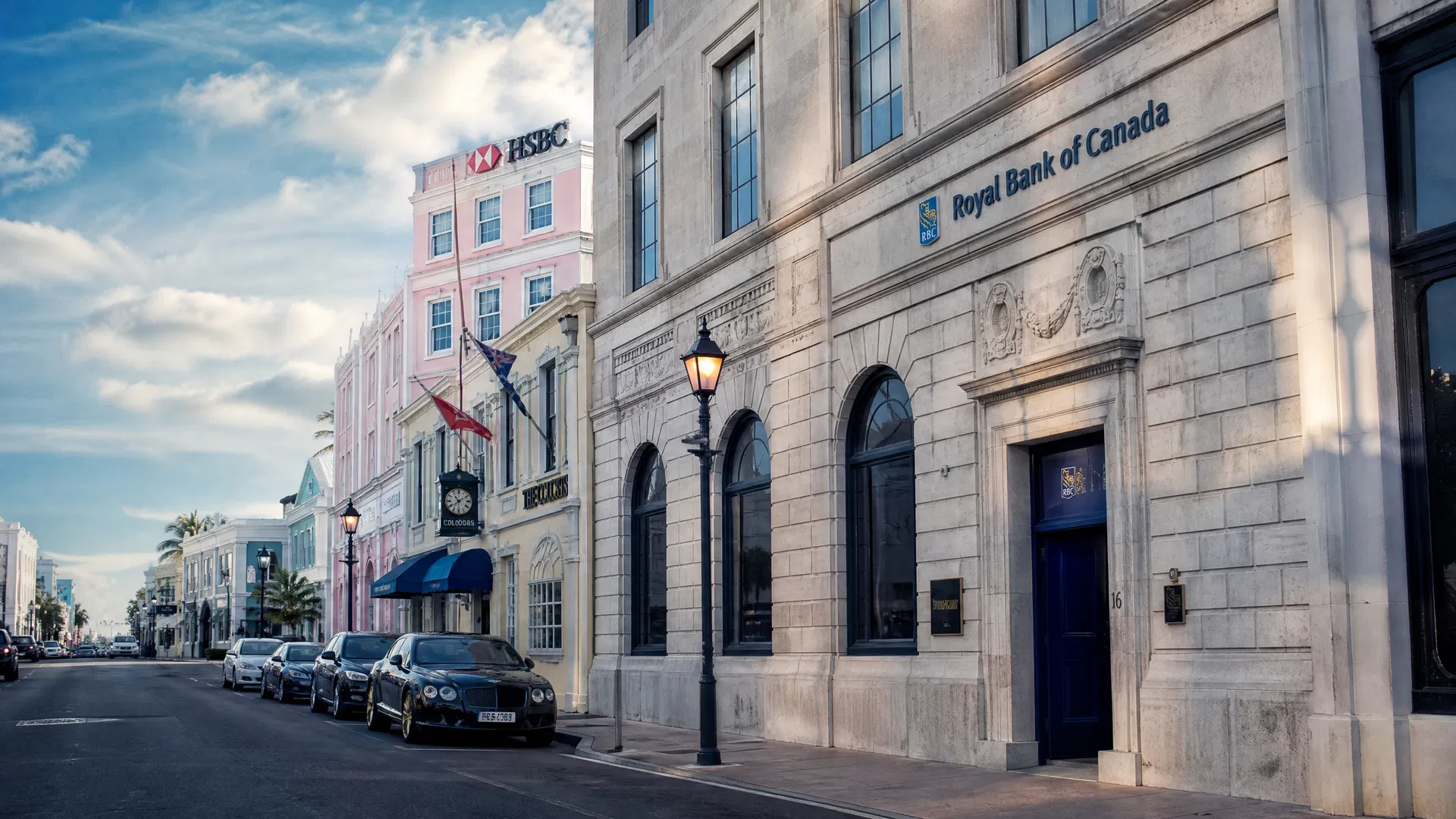
The Bahamas ranks among the most searched offshore banking destinations. The name alone carries decades of association with financial privacy, palm trees and discretion. The reality in 2026 is considerably more prosaic, and for most clients who contact us about it, considerably less attractive than expected.
We do not carry the Bahamas in our portfolio. This article explains why, and which destinations actually deliver what people are looking for when they search for a Bahamas account.
The CRS: the Bahamas joined in 2018
The first and most important fact: the Bahamas has participated in the Common Reporting Standard since 2018. Bahamas banks report year-end balances, interest, dividends and gross proceeds from securities sales once a year to the Bahamas tax authority, which forwards the data to the account holder's country of residence. The same mechanism that applies in Switzerland, Cayman Islands and Panama applies in the Bahamas. There is no CRS advantage.
This does not make a Bahamas account worthless, but it removes the privacy argument that drives most searches. Whoever is looking for an account outside the CRS reporting chain needs to look elsewhere. The options are in our overview Non-CRS countries 2026.
Minimum deposits: the reality
Bahamas banks have historically served a wealthy international clientele. That history is reflected in their minimum deposit requirements. Typical minimums for non-resident accounts run from USD 25,000 to USD 100,000. Private banking relationships at the established names start at USD 500,000 or more.
That is not inherently a problem for the right client, but it creates an unfavourable risk-reward ratio when combined with the account stability issues discussed below. Paying a high entry ticket for an account that may be closed without warning is a poor deal.
Account stability: the problem nobody mentions
The Bahamas banking sector has contracted significantly over the past decade. Several international banks have exited the market entirely; others have progressively tightened their non-resident client acceptance criteria. The result is a pattern we see repeatedly in consultations: clients who opened Bahamas accounts five or ten years ago have received closure notices, often without explanation, and often at short notice.
This is not unique to the Bahamas, it is a global trend driven by de-risking, correspondent banking pressure and compliance cost, but the Bahamas is a particularly pronounced example because the sector's contraction has been so visible. An account that exists today may not exist in two years. For a relationship that requires a significant minimum deposit and involves the friction of non-resident onboarding, that instability is a material concern.
What the Bahamas genuinely offers
To be fair: for the right client profile, a Bahamas account has real advantages. USD denomination with direct access to the US dollar system. Political stability and a long track record as a financial centre. English-language banking with documentation standards familiar to international clients. No income tax, capital gains tax or inheritance tax in the Bahamas itself, which matters for clients who are also considering residency.
But those advantages are available elsewhere, at lower minimums, with better account stability, and in some cases without CRS reporting. The comparison is not flattering to the Bahamas.
The alternatives, matched to what you actually want
The question is always: what is the underlying goal? The Bahamas gets searched for several different reasons, and each has a better answer.
If you want a non-CRS account: Georgia and North Macedonia are the clearest options, both fully remote, both with low or no minimum deposits, both with stable banking systems. The USA is the largest non-CRS jurisdiction in the world; the argument is in US account without CRS.
If you want a USD account with stable offshore banking: Panama and Belize both offer USD accounts, remote opening, and banking sectors that have proven more stable for non-resident clients than the Bahamas over the past decade. Panama is CRS; Belize joined in 2018 as well, but both offer better account stability at lower minimums.
If you want private banking at a comparable price point: Cayman Islands and Cook Islands serve the same client segment with more predictable account relationships. Liechtenstein and Monaco offer European private banking with a different risk profile entirely.
If you want the Bahamas for residency reasons: that is a separate conversation that goes beyond banking, and one where the Bahamas may genuinely make sense. But the banking relationship should be evaluated on its own merits, not assumed to follow from the residency decision.
The honest summary
The Bahamas is a legitimate jurisdiction with a real banking history. It is not a scam, and accounts there are not inherently dangerous. But in 2026, the combination of CRS membership, high minimums, and declining account stability for non-residents means it is rarely the best answer to the question that drives the search. There are better options for every goal the Bahamas is typically sought for, and those options are what we carry in our portfolio.
If you are unsure which destination fits your specific situation, the free consultation is the right starting point. We will tell you honestly if the Bahamas is the right answer, and if it is not, what is.
Frequently asked questions
Does the Bahamas participate in the CRS? Yes, since 2018. Bahamas banks report year-end balances, interest and income to the tax authority of the account holder's country of residence. There is no CRS advantage.
What minimum deposit do Bahamas banks require? Typically USD 25,000 to USD 100,000 for non-residents. Some private banks require USD 500,000 or more. The combination of high minimums and uncertain account stability makes the risk-reward ratio poor.
What are the real alternatives to a Bahamas account? Depending on your goal: Georgia or North Macedonia for non-CRS with low minimums and remote opening; Panama or Belize for USD accounts with stable banking; Cayman Islands or Cook Islands for private banking at comparable price points but with better account stability.