Open an offshore bank account 2026: definition, countries & process
What an offshore account really is, why it is legal and how you open one beyond your home system. Classic and modern offshore locations, process and costs.
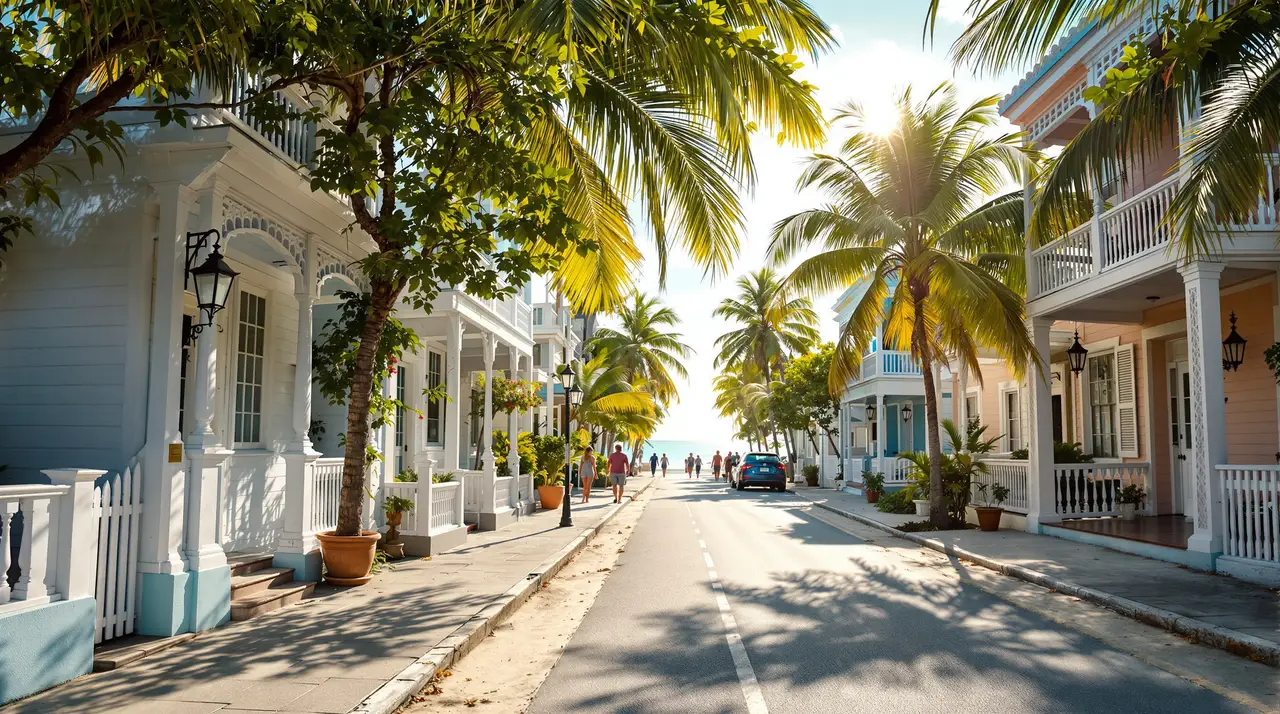
Offshore is not a dirty word. The term has been so poisoned by scandals and film clichés that many people no longer see its actual meaning. Yet an offshore account is, at its core, something completely unspectacular and legal: a bank account outside your own country. No more and no less.
In this guide we separate the myth from the tool. You will learn what offshore really means, why it is legal, which locations make sense in 2026 and how the opening runs remotely. Because used properly, an offshore account is one of the smartest building blocks of an international financial structure.
What does offshore really mean?
Offshore literally means off the coast, and in the financial context simply means outside your own home jurisdiction. A Briton holding an account in Georgia, Singapore or Puerto Rico has an offshore account. An American with an account in London has one too. The term describes a geographic relationship, not a criminal intent.
The old image of the letterbox bank on a palm island that asks no questions is obsolete. Modern offshore banks are strictly regulated, run KYC checks and in many cases participate in the automatic exchange of information. What remains is the actual value: access to stable banks, hard currencies and genuine diversification outside your own system.
Offshore, foreign account or non-EU account?
The terms overlap, so a quick taxonomy. A foreign account is the umbrella term for any account outside your country of residence. A non-EU account narrows that to locations outside the European Union, with the decisive advantages in bail-in protection and register distance; for UK readers the equivalent thought is an account outside the UK system entirely. Offshore in the narrower sense is often used for international financial centres that specialise in non-residents.
For practice that means: when FreedomBanking Plus speaks of accounts beyond your home system, we mean exactly this combination of non-resident banking and offshore advantages. The big-picture walkthrough is the guide to opening a bank account abroad.
Why an offshore account beyond your home system?
The reasons match the core advantages of any account beyond the home walls. Protection from bail-in under the EU and UK resolution regimes, which offshore accounts outside those systems do not fall under; details in asset protection with an offshore account. No entry in the home account registers, since those capture only accounts inside their own systems. More privacy, depending on the location, legal and towards third parties, as explained in discreet banking. Diversification across currencies, banks and political systems.
Classic versus modern offshore locations
The offshore world has changed. Broadly, two categories can be distinguished.
Classic financial centres. Established hubs such as Switzerland and Singapore stand for the highest stability, excellent wealth management and strong, rule-of-law banking secrecy towards third parties. They participate in the CRS but offer a level of safety and service quality that leads the world.
Modern, rising locations. Countries such as Georgia, Serbia and North Macedonia have developed into pragmatic, accessible banking locations. They score with uncomplicated remote processes, lower entry hurdles and, depending on the location, reduced or no CRS reporting. Puerto Rico occupies a special position as a US territory; see US account without CRS.
All locations compared directly by CRS status, minimum deposit and remote option: destinations page.
Is an offshore account legal?
Yes, without any restriction. There is no law that forbids a UK or Nordic citizen from holding an account abroad. Legality ends at only one place: the income must be taxed. An offshore account makes no income tax-free and no tax obligation invisible. How to declare correctly is in Declaring your offshore account.
How the opening works
The process is fully remote at most locations: choose the location and order without an initial call; receive the document checklist exactly to the bank's requirements; file review before submission to avoid rejections; personal bank introduction to a named contact; activation directly by the bank. Why this accompanied route has far higher success rates than the solo attempt is explained under How it works and Why banks reject non-residents.
Costs and minimum deposits
Costs vary sharply by location. Rising offshore locations often have low entry hurdles, while classic financial centres demand higher minimum deposits and account fees in exchange for premium stability. Budget the minimum deposit, the running fees and the service fee for the accompanied opening. The exact values per country are in the destinations overview.
A short history of offshore banking
The term offshore originally comes from the Channel Islands off the British coast: literally lying off the shore, with tax law of their own. Over decades, international financial centres specialising in foreign clients grew from that seed; today you can bank in those very islands through our British Crown Dependencies page.
The bad reputation arose because some of these places long asked no questions, and were duly abused. That era is over. With the CRS, tightened anti-money-laundering rules and international pressure, the serious offshore locations have transformed fundamentally. Today they are regulated, transparent towards authorities and still valuable, because they offer non-residents access, stability and diversification. The modern offshore idea is not hiding but distributing.
Location profiles at a glance
Georgia. The rising star of accessible banking. Uncomplicated processes, an entrepreneur-friendly environment and, depending on the constellation, reduced reporting. Ideal for beginners and for anyone seeking distance from automated reports.
Serbia. A stable location outside the EU with growing significance, good accessibility and a position that makes it an interesting bridgehead between east and west.
North Macedonia. Another Balkan location outside the EU, combining pragmatic banking with diversification advantages.
Switzerland. The epitome of the stable financial centre. Highest bank stability, strong banking secrecy towards third parties, excellent wealth management and the Swiss franc as one of the hardest currencies in the world. The first choice for the core of a fortune.
Singapore. The Asian counterpart to Switzerland. First-class stability, access to Asia's growth markets and a highly professional banking sector. Perfect for globally minded investors.
Puerto Rico. A US territory and a special case, with a unique position between the American system and rules of its own. Especially interesting alongside the US account topic.
The full comparison of all 31 locations: destinations page.
Which location suits whom
You want maximum stability for your core wealth: the road leads to Switzerland or Singapore. You want uncomplicated access and distance from automated reporting: Georgia, Serbia or North Macedonia deserve a close look. You want the US dollar and proximity to the American system: Puerto Rico or a direct US account. You want diversification across several locations: deliberately combine a stable premium centre with an accessible non-CRS location.
The typical offshore-account mistakes
Choosing the location by cliché instead of by your own goal; the right question is not which location sounds exotic but which fits my purpose. Scattering cold applications; every rejection makes the next harder. Forgetting the declaration; the only genuine mistake with legal consequences. Waiting too long; an offshore account is built in calm times, not in the crisis.
Offshore step by step
Define the goal. Clarify what the account should deliver: stability, privacy, currency diversification or business use; the location follows from that. Choose location and bank. You order online, no initial call. Document checklist. You are told exactly which documents your bank requires. File review. We check everything for consistency and bank fit before the bank sees it, minimising rejection risk. Bank introduction. Your application goes to a named contact at the institution. Activation. You receive your credentials directly from the bank.
Offshore for companies and for individuals
A personal offshore account serves personal diversification, holding hard currencies and protection from concentrated access. A business account through an offshore or foreign company is often the actual core of an international structure: it separates person and business, creates legitimate privacy and enables currencies and markets that a purely domestic account cannot reach.
Costs in detail
Budget realistically with three items. First the minimum deposit, low at rising locations, considerably higher at premium centres. Second the running account and transaction fees. Third the one-off service fee for the accompanied opening, which spares you laborious research, failed attempts and rejections. Weigh the total against the wealth it secures, and every amount shrinks to a bare insurance premium.
Offshore myths that refuse to die
Myth: offshore is illegal. False. It is a legal geographic concept, as long as you declare your income. Myth: offshore means no questions, no ID. Long obsolete; modern offshore banks run strict KYC. Myth: offshore only pays off for millionaires. False; accessible locations like Georgia make diversification possible for a broad public.
Offshore and taxes: the clean separation
The most stubborn error links offshore automatically with tax savings. That link does not exist. An offshore account does not change your tax position. As a resident of the UK or the Nordics you pay tax on your worldwide income, wherever the account sits.
What offshore actually delivers is something else: diversification, stability, currency variety and privacy towards third parties. Genuine tax optimisation arises only from relocating your residence or through legal structures, both complex topics of their own and our group's advisory home turf. The account is the operational tool, not the tax trick.
Frequently asked questions
Is an offshore account legal? Yes. Opening and holding one is fully legal. Only the income is taxable and must be declared at home.
What distinguishes offshore from an ordinary foreign account? Nothing fundamental. Offshore emphasises the focus on non-residents and locations outside your own system.
Can I open an offshore account remotely? At most locations, yes. The whole process runs by email with a personal bank introduction.
Which offshore location is the best? For maximum stability, Switzerland or Singapore; for accessibility and privacy, rising locations such as Georgia.
Does an offshore account save taxes? No, not by itself. It serves diversification and protection, not tax savings. The income remains taxable.
Is my money safe in an offshore account? Safety depends on the bank's quality and the jurisdiction's stability, not on the word offshore. Outside the EU and UK, the bail-in machinery of those regimes additionally does not apply, an extra safety argument for many.
How long does the opening take? Depending on location and completeness of documents, from a few days to a few weeks. A clean file review beforehand noticeably accelerates the process.
Can I run several offshore accounts in parallel? Yes, and for genuine diversification that is often exactly right: a stable premium location combined with an accessible non-CRS location.
Your offshore account, cleanly set up. We help you find the right location beyond your home system and accompany the entire opening. Legal, discreet, remote, in 31 jurisdictions. Choose your jurisdiction and order now or request your free consultation.